Petite Styling Tricks That Actually Make You Look Taller
Quick Answer: The fastest way to look taller when you’re petite is to create one long, unbroken vertical line — monochrome outfits, high-waisted bottoms, and hems tailored to the exact right length. Nude or skin-tone pointed shoes add the visual equivalent of an extra inch or two. None of it is about hiding your height; it’s about proportion.
Being petite is genuinely great. Sleeves are the only real enemy, and every hem is negotiable.
But dressing a smaller frame does take a handful of specific tricks, and most of the advice floating around gets the goal wrong. You’re not trying to disguise anything. You’re trying to keep your proportions balanced so that clothes read as designed-for-you instead of borrowed.
Here are the petite styling tricks that actually work — and the one about hemlines that quietly matters more than all the others combined.

Why Do Some Outfits Make Petite Frames Look Shorter?
It comes down to horizontal interruption.
Every time your outfit changes color, texture, or direction across your body, the eye stops and registers a segment. More segments read as a shorter overall line, regardless of your actual height. A contrasting belt, a cropped jacket ending mid-torso, a bold hem — each one is a small horizontal cut.
Taller frames absorb those cuts easily because there’s more distance between them. On a petite frame, three or four interruptions in 60 inches makes everything look compressed.
Understanding that one principle explains basically every trick below.
How Do You Create a Long, Unbroken Line?
The single most effective petite trick is a continuous vertical column.
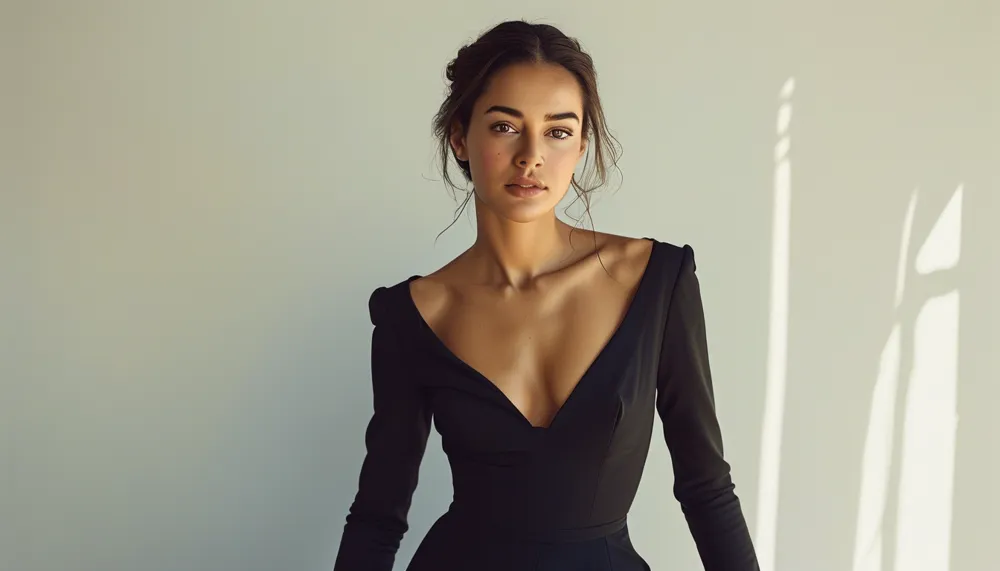
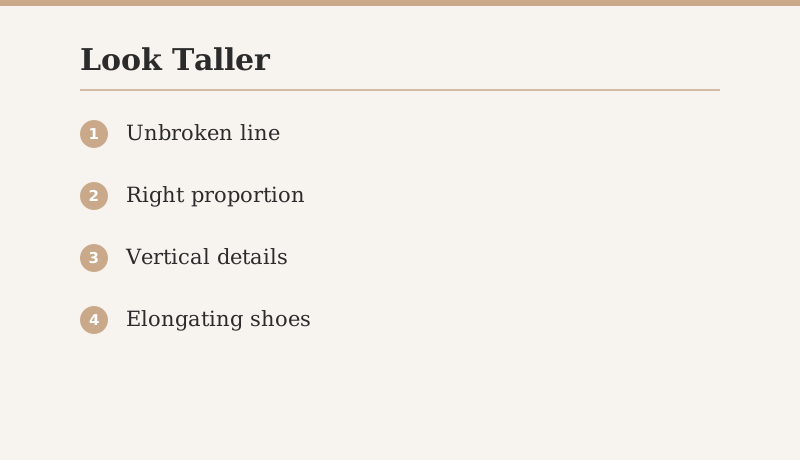
Go monochrome. One color from shoulder to shoe removes the horizontal cut entirely. It doesn’t have to be exact — navy with slate, or three shades of camel, works nearly as well and looks more considered than a matched set.
Wear high-waisted bottoms. This is the highest-leverage change most petite women can make. Raising the waistline from your natural waist to just above it shifts the leg-to-torso ratio visibly, and it costs nothing but a different pair of trousers.
Tuck, or half-tuck. An untucked top hides the waistline you just spent money raising. A front tuck keeps the line while staying relaxed.
The combination of monochrome plus high-waisted plus tucked is the closest thing petite styling has to a cheat code.

Mind Your Proportions and Lengths
Go for tailored, well-fitting pieces rather than anything oversized that can swallow a petite frame. Oversized styling isn’t off-limits, but it needs a counterweight — an oversized top demands a fitted bottom, and vice versa. Oversized on oversized is where petite frames disappear.
Three lengths to get right:
Jackets. Cropped jackets that end at or just above the waist work beautifully because they end at the natural break rather than cutting the leg line. A blazer that hits mid-thigh shortens everything below it.
Trouser hems. Full-length trousers should just kiss the top of your shoe with heels, or hit the ankle bone cleanly with flats. Fabric pooling at the ankle is the single most common petite styling error.
Tops. A hem hitting at the hip bone or slightly above keeps proportions balanced. Anything hitting mid-thigh needs to be styled deliberately, not accidentally.

Use Vertical Details
Vertical lines draw the eye up and down instead of across, and they’re more effective than most people expect.
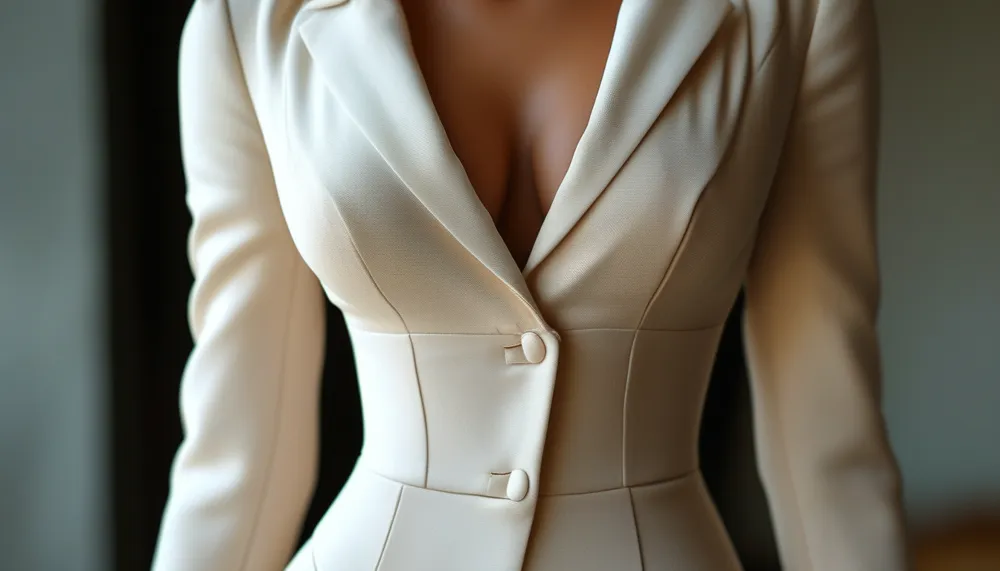
Look for: a long cardigan worn open, a column of buttons down the front, an open blazer creating two vertical panels, a V-neckline extending the neck, a long pendant necklace, a narrow scarf hanging loose rather than wrapped.
Stripes deserve a note. Vertical stripes work as advertised. Horizontal stripes are fine on petite frames as long as the rest of the outfit isn’t also segmented — the “never wear horizontal stripes” rule is far too absolute.
The open-blazer trick is the easiest one to test tonight. Put on any outfit, add an open long blazer or cardigan, and look in the mirror. The two vertical edges do real work.
The Right Shoes and Hems
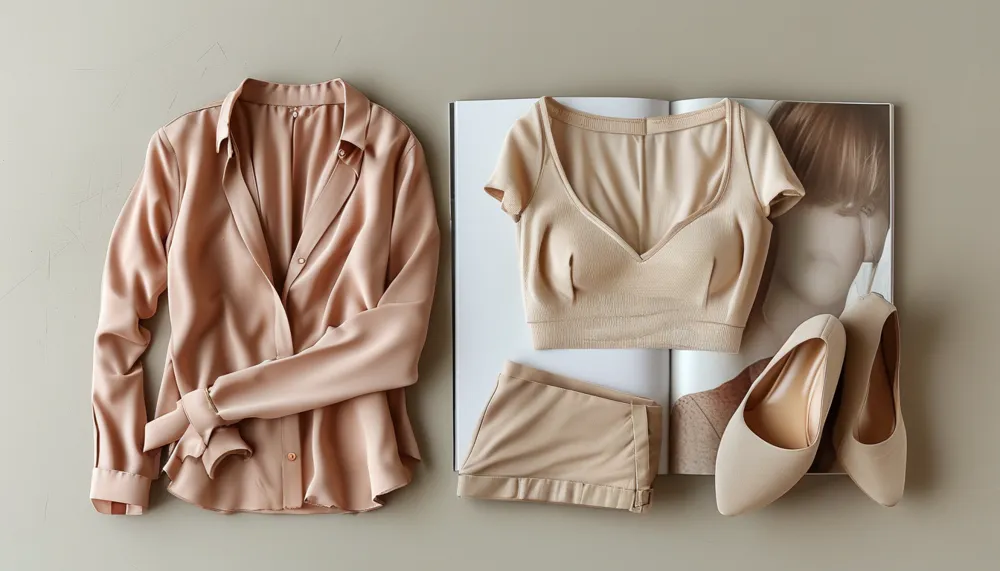
Nude or skin-tone shoes extend the leg by blending with your skin instead of creating a hard stop at the ankle. Match the tone to your own skin, not to a generic beige, and the effect is noticeably stronger.
Pointed toes add a subtle lengthening effect — the point continues the line of the leg for another inch or so. Round toes create a full stop.
Low vamp matters more than heel height. A shoe that cuts across the top of your foot high shortens the leg. A shoe with a low-cut vamp showing some toe cleavage extends it. This is why a 2-inch pointed pump can look more leg-lengthening than a 4-inch chunky sandal with an ankle strap.
Speaking of ankle straps: they cut the leg horizontally at its narrowest point. Not forbidden, but know what they cost you.
And tailor your hems. A $40 alteration on a $90 pair of trousers does more for how you look than a $200 new pair that doesn’t fit. If you buy activewear too — a well-fitting pair of high waist leggings in a petite inseam saves you the roll-at-the-ankle problem entirely.
What Nobody Tells You About Petite Styling
Petite is a proportion, not a height. Most brands cut petite ranges for 5’4” and under, but the sizing is really about shorter arms, a shorter rise, and a higher natural waist. Plenty of women at 5’5” and 5’6” fit petite cuts better than regular ones, and never try them.
Regular sizes tailored beat petite sizes untailored. The petite range is smaller and often blander. Buying regular and paying for hems gives you far more choice.
The “no maxi dresses” rule is nonsense. Maxi dresses work well on petite frames when the waist is defined and high, and the hem doesn’t drag. A maxi that skims the floor with a defined empire or natural waist is one of the most lengthening things you can wear.
Big bags shrink you; the size ratio is real. An oversized tote next to a petite frame reads as a size comparison. Mid-size bags read as proportional.
Monochrome doesn’t have to be neutral. An all-red outfit works exactly as well as an all-black one. The trick is the single color, not the specific color.
Mini FAQ
What is the most flattering pant style for petite women?
High-waisted straight-leg or slightly flared trousers, hemmed to the exact right length for the shoe you’ll wear them with. The high waist lengthens the leg, and a straight or slightly flared leg keeps a clean vertical line. Wide-leg works too, provided the hem doesn’t puddle.
Should petite women avoid oversized clothing?
No — but oversized pieces need a fitted counterpart. An oversized sweater over slim trousers works. An oversized sweater over wide-leg trousers usually doesn’t. The rule is one volume at a time.
Do heels actually make a difference for petite styling?
Some, but less than proportion does. A well-proportioned outfit in flats generally looks taller than a badly proportioned one in 4-inch heels. If you do wear heels, a low-vamp pointed style adds the most apparent length per inch of actual height.
TL;DR:
- Horizontal interruptions shorten the frame — minimize them.
- Monochrome + high-waisted + tucked is the highest-impact combination.
- Tailor every hem. Fabric pooling at the ankle undoes everything else.
- Nude, pointed, low-vamp shoes extend the leg; ankle straps cut it.
- Oversized is fine — just pair it with something fitted.
Petite styling is about length and balance, not concealment. Build the long line, get the proportions right, and you’ll look effortlessly taller without changing a single thing about yourself.
Keep Reading
This article is for general styling and informational purposes only. Trends, sizing, availability and pricing may vary by brand and season.