The Petite Hemline Map: Where Dresses Should End at 5'3' and Under
You order a midi dress. It arrives and it’s a maxi. You order a maxi and it’s a floor-sweeping trip hazard with a dry-cleaning bill attached. The labels aren’t lying — they’re just drafted on a body about six inches taller than yours.
Quick Answer: Standard dress lengths are drafted on fit models around 5’8”, so at 5’3” and under everything drops roughly 4–6 inches. A “mini” usually lands as a wearable short, a “midi” becomes an ankle-length dress, and a “maxi” puddles. The length to actively avoid is anything ending at the widest part of your calf — aim for just below the knee or a clean ankle-skim instead, and budget for a hem alteration on anything in between.

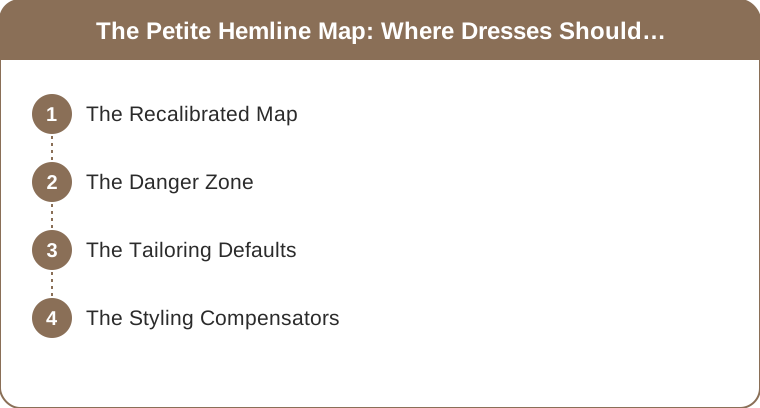
Where Do Standard Dress Lengths Actually Land on a Petite Frame?
Roughly four to six inches lower than the label implies. Here’s the translation:
- “Mini” (32–34 in. total length) → lands as a regular short dress, often mid-thigh. Frequently the pleasant surprise of petite shopping
- “Midi” (44–48 in.) → drops to shin or ankle. The accidental maxi, and the most common disappointment
- “Maxi” (55+ in.) → puddles on the floor. A hem-walking hazard, and it wears out at the back where you step on it
- “Knee-length” (38–40 in.) → lands below the knee, usually at the top of the calf. The danger zone, covered next
Petite-cut lines redraw this at the pattern stage — they shorten the skirt and raise the waist seam, which matters more than most people realize. A regular dress hemmed short still has the waist in the wrong place; a petite-cut one doesn’t.
What’s the Danger Zone for Petite Hemlines?
The widest point of your calf. This is the single most important line on the map.
A hem drawn horizontally across the fullest part of the calf does two things at once: it draws the eye to the widest measurement of the leg, and it cuts the leg into two short segments instead of one long one. On a petite frame with less vertical space to spare, that’s expensive.
The safe zones, in order of reliability:
- Just below the knee — above the calf’s fullest point, the most flattering midi length for petites
- Ankle-skim — hitting about an inch above the ankle bone, below the calf entirely
- Above the knee — no calf involvement at all
The zone to avoid: anywhere between the top of the calf and about two inches above the ankle.
Two inches genuinely decides this. The same dress hemmed to just below the knee versus mid-calf produces two visibly different outfits — which is the entire midi question for petite frames, and why the tailor matters so much here.

Should You Just Assume Everything Needs Hemming?
Yes, and it’s cheaper to accept that up front than to keep returning things.
Build the alteration into the purchase price mentally. A basic dress hem typically runs $15–30 — call it two coffees — and it’s the highest-frequency alteration in a petite wardrobe by a wide margin.
Easy and cheap to hem:
- Straight and A-line skirts in woven fabric
- Simple sheath and shift dresses
- Anything with a plain turned hem
Hard or expensive to hem:
- Tiered dresses (shortening one tier changes the whole proportion)
- Pleated skirts (the pleats have to be reset)
- Anything with a border print, lace edge, or decorative trim at the hem
- Bias-cut dresses (they need to hang for 24 hours before they can even be measured)
The rule: if a dress falls into the second list, buy it petite-cut or don’t buy it. Paying $80 to alter a $90 dress is a decision you make exactly once.
Knits and casual pieces are the DIY tier — a stretch stitch or even a fusible hem tape handles a jersey dress fine, and nobody is inspecting the inside of a weekend dress.
5 Mistakes Everyone Makes
- Shopping the petite section only for length. Petite cuts also raise the waist seam, shorten the sleeve, and narrow the shoulder. That’s usually the difference between “hemmed” and “fits.”
- Assuming maxi is off-limits. A maxi works beautifully at 5’2” if it’s hemmed to just clear the floor in the shoes you’ll wear. It’s the puddle that fails, not the length.
- Wearing a contrasting shoe under a long hem. A shoe that contrasts with your skin visually cuts the leg at the ankle, which is the last place you want a break.
- Belting at the natural waist by default. On a petite frame, belting slightly above the natural waist raises the visual start of the leg and adds apparent height.
- Buying the “flattering” length without trying it. Calf shape varies enormously at the same height. Your danger zone is yours, not the average one.
Number three is the sleeper. A nude-to-your-skin-tone shoe under a midi does more for apparent height than an inch of heel.
Which Styling Tricks Add Length Without Scissors?
For the dresses you can’t or won’t alter:
Define the waist high. A belt or a seam sitting just above the natural waist raises where the leg appears to start. This works on almost any silhouette.
Use the front knot or side ruche. Both are adjustable hem-raisers you already have. A knot at the front hem of a shirt dress shortens it and adds a diagonal line at the same time.
Match shoe to skin. A nude-to-you shoe continues the leg line past the hem instead of stopping it. This is the highest-return trick on the list and it costs one pair of shoes.
Build a vertical column. Dress and shoe in the same tonal family, or a long open layer over the dress, produces an unbroken line that reads taller regardless of where the hem lands.
Choose a V or open neckline. The vertical line at the top does the same job as the column at the bottom.
For a wearable everyday version of the column, a petite midi dress in a solid tonal shade with a matched shoe is about as reliable as this gets — one color, one line, no hemline debate at all.
FAQ
What length dress is most flattering at 5’2”?
Just below the knee for a midi effect, or a clean ankle-skim if you want length. Both avoid the widest part of the calf, which is the line that actually causes the “swamped” look.
Are petite sizes just shorter, or actually cut differently?
Genuinely different. Petite patterns shorten the skirt and sleeve, raise the waist seam, narrow the shoulder, and often reduce the armhole. That’s why a hemmed regular dress rarely fits the same way.
Can a maxi dress work if I’m under 5’3”?
Yes, hemmed to clear the floor by about half an inch in your usual shoes. Vertical seams, a high waist, and a monochrome shoe make it work; a puddling hem and a horizontal tier detail don’t.
TL;DR:
- Standard lengths land 4–6 inches lower on petite frames — translate the label, don’t trust it
- Avoid hems at the widest part of the calf; aim just below the knee or an ankle-skim
- Two inches decides the entire midi question
- Budget a $15–30 hem into every purchase, and skip tiered, pleated, or bordered hems entirely
- Petite cuts move the waist seam too, not just the hem
- Nude-to-you shoes and a high-defined waist add length without any alteration
Translate the labels, dodge the calf’s widest line, budget the hem fee, style the column. The dress lengths were never wrong — the map was just drawn at the wrong altitude, and petite styling simply corrects the survey.
Keep Reading
This article is for general styling and informational purposes only. Trends, sizing, availability and pricing may vary by brand and season.